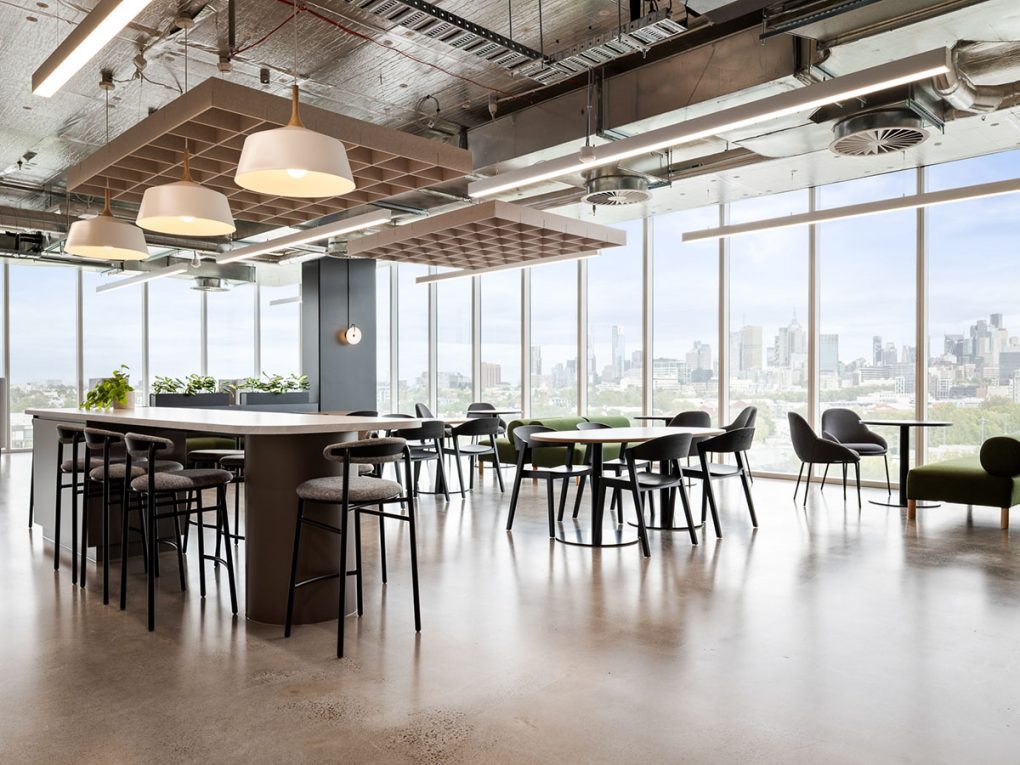
Beyond the Price Tag: Measuring Office Design ROI
Office fitouts are investments, not expenses. Learn how to measure the real impact of your workspace design—from productivity gains to staff retention—and prove the business case for better design.
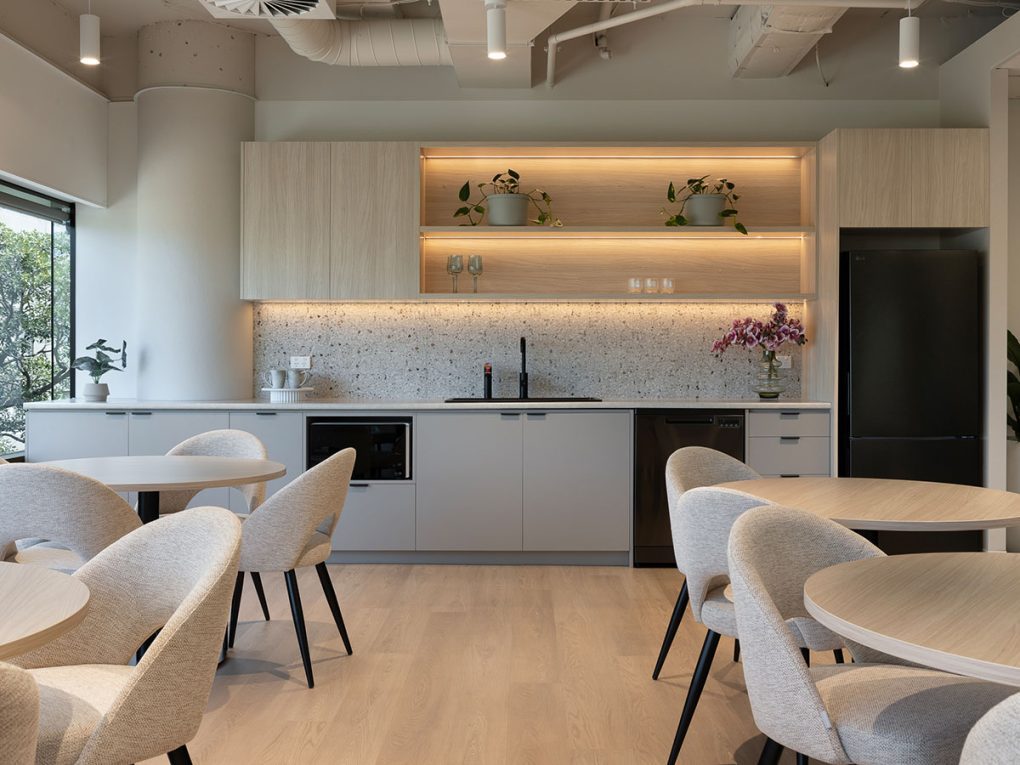
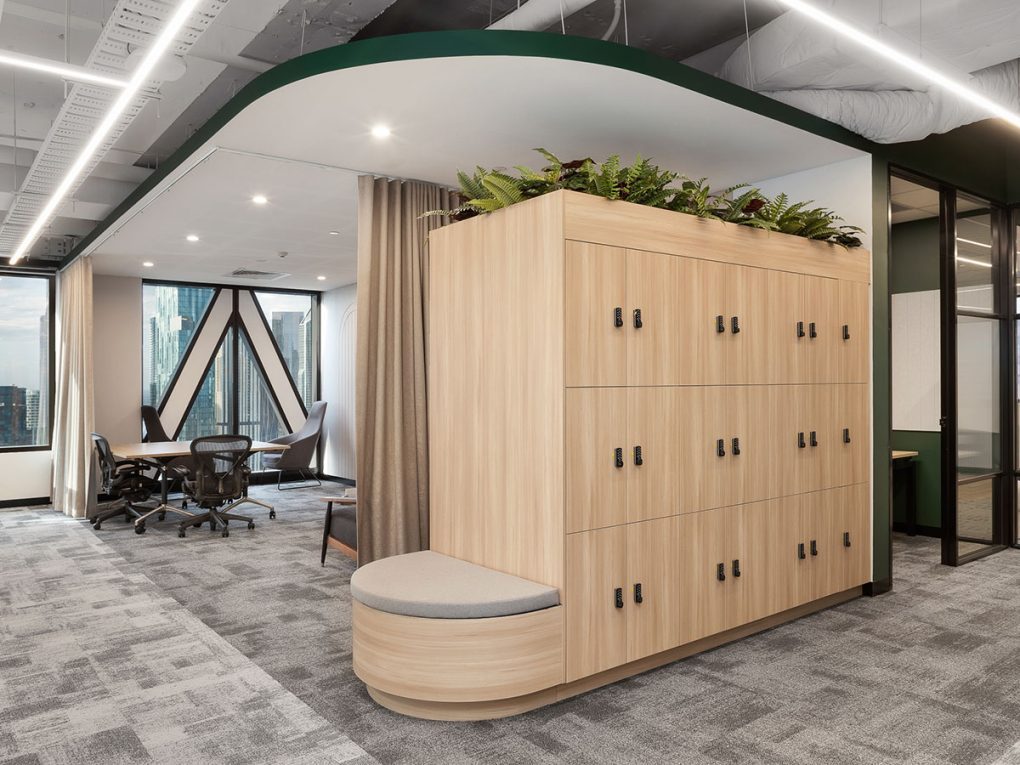
Office fitouts are investments, not expenses. Learn how to measure the real impact of your workspace design—from productivity gains to staff retention—and prove the business case for better design.

Have you noticed clear limitations in your current office space? This guide is for you — going in-depth on the various factors that can influence your stay or go decision — all from a clear workplace strategy perspective.

A lease is more than a contract – it’s a strategic asset. In this blog post, the office fitout professionals at Contour Interiors cover how to negotiate the best possible commercial office lease.

Discover how tech-enabled offices boost hybrid work performance by integrating smart tools, seamless collaboration, and data-driven design. Learn what high-performing workplaces get right—and how to assess your own tech stack for success.

Relocating an office is more than a logistical operation. It’s a shift in culture, workflow, and daily routine. When done well, it can re-energise teams, align space with strategy, and create momentum for the business. When mishandled, it can lead to confusion, resistance, and disengagement. That’s where change management comes in.

The data makes one thing clear: neither full remote nor mandatory office attendance is universally perfect. Instead, an encouraging and thoughtful approach, one that invites rather than compels, might strike the ideal balance. In this article, we explore best practices for doing just that: inviting your team back into the office.

In the lifecycle of a business, the end of a commercial lease might seem like a mere footnote—a routine conclusion to a contractual agreement. Yet, beneath this procedural veneer lies a strategic inflection point brimming with opportunities. The termination of a lease is not just about logistics and legalities; it’s a chance to reassess, realign, and perhaps even reinvent the physical and philosophical dimensions of a business.

When it comes to choosing a new office space, the stakes are surprisingly high. The right space can energise your team, streamline your operations, and even lower your costs. But the wrong choice? It can be like buying a suit that doesn’t quite fit: not only uncomfortable but costly to alter. Here’s a comprehensive guide on what to look for when assessing properties for your new office.

In the endless scramble to secure prime office real estate, many businesses forget that the address is only part of the equation. What happens inside those walls—and how effectively that space enables your team to work—is where the real strategy lies. Workplace strategy steps in as the critical framework that redefines the process of selecting and designing an office.

Commercial Interior Design is not just about choosing paint colours or positioning a few potted plants; it’s about transforming empty rooms into living, breathing environments where function meets form, and design meets delight. In this post, we’ll pull back the curtain on the journey from concept to creation, exploring the role of corporate interior designers and how their work affects the corporate ecosystem.

Redesigning your workspace is more than just swapping out furniture or picking a new shade of paint for the walls. It’s about crafting an environment that reflects your company’s culture, empowers your employees, and invites innovation. But what happens when you bring in a corporate interior design specialist to make this transformation a reality?

Corporate interior design plays a critical role in shaping not just the aesthetic appeal of an office, but also its functionality, employee experience, and brand identity. In the modern corporate landscape, workspaces are no longer merely places to complete tasks—they are environments that influence creativity, collaboration, and wellbeing.

Does your office space support talent retention and attraction? In the competitive landscape of talent acquisition and retention, the design of your office space can be a game-changer.

In the world of office real estate, the signs that it’s time to upgrade your workspace are often subtle, lurking in the shadows of daily operations, whispering through the complaints of employees, and hinted at by underutilised desks.

Colour psychology delves into how different colours affect human emotions and behaviours. This field has garnered substantial interest across various domains, including marketing, healthcare, and notably, office design.

The workplace as we knew it has undergone a seismic shift. The pandemic acted as a catalyst, pushing organisations to adopt remote work at an unprecedented scale. Now, as the world slowly returns to normalcy, the question arises: what is the ideal balance between office and remote work?

In the relentless pursuit of enhanced productivity and employee engagement, many organisations find themselves entangled in a web of incentives and strategies, often overlooking the fundamental elements of human motivation.

As businesses grapple with unprecedented challenges in a post-pandemic world, the application of the PERMA model in the workplace offers a roadmap to not just surviving, but flourishing.

Imagine stepping into an office where each desk, rather than marching in monotonous uniformity, sings a different tune. One corner sports a vibrant splash of family photos and postcards from far-flung places, while another hosts a zen garden, complete with miniature rake and serene rock formations.

In the landscape of corporate performance enhancement, a novel concept has gained traction: gamification. Integrating game elements such as points, badges, and leaderboards into work environments is being touted as a groundbreaking strategy to boost employee engagement and productivity.

Imagine an office that intuitively welcomes everyone. It doesn’t scream “accommodation” or highlight differences; instead, it operates on a philosophy so seamless that an outsider might never notice its intent. This is the ethos of universal design—a methodology that enhances the functionality of an office for all potential users, making them feel equally valued, regardless of age, size, ability, or other factors.

In the intricate dance of office design, where every square centimetre and chosen fitting can subconsciously cue you to feel and perform differently, there lies an under-appreciated hero: natural light. By combining architectural expertise with psychological understanding, we explore how natural light in the workplace goes beyond mere brightness—it’s about shaping how we think, feel, and perform.

In the post-pandemic landscape, the office has languished as a forgotten relic while the world has embraced restaurants, concerts, and global travel with renewed zest. Despite eager calls from leadership for a return to the nine-to-five, desks remain empty, and conference rooms echo with the ghostly clicks of past presentations. Yet, the potential of the physical office remains significant—an untapped resource in an era desperate for connection and innovation.

In an era where sustainability intersects with innovative design, adaptive reuse emerges as a compelling strategy in commercial architecture. This approach involves repurposing old industrial or commercial buildings into vibrant, functional spaces, breathing new life into structures that might otherwise be neglected. As businesses increasingly value uniqueness and historical character, adaptive reuse projects offer an opportunity to create distinctive and inspiring office environments.

In the constantly evolving world of workplace design, there’s been a significant shift towards creating spaces that not only inspire but also foster the elusive state of “flow.” This concept, once primarily associated with artists and athletes, is now recognised as the pinnacle of productivity and well-being in the contemporary office environment.

The human mind excels in identifying patterns, always searching for organisation and meaning in our surroundings. This natural inclination is the reason we see faces in the clouds or recognise common forms amidst nature’s irregularities — our brains are programmed to impose structure on disorder.
This intriguing feature of human observation is central to the study of Gestalt psychology, which investigates the way we perceive and arrange the visual information around us.

In the quest to create more meaningful and productive work environments, the concept of psychogeography offers a fresh perspective, urging designers and organisations to consider the psychological underpinnings of office spaces.

In today’s shake-up of the corporate scene, the traditional, yawn-inducing office doesn’t cut it for the swipe-right, Instagram-loving workforce. Enter the ‘Envy Office’—a chic, selfie-worthy workspace designed to not just lure young professionals back but to make them never want to leave.

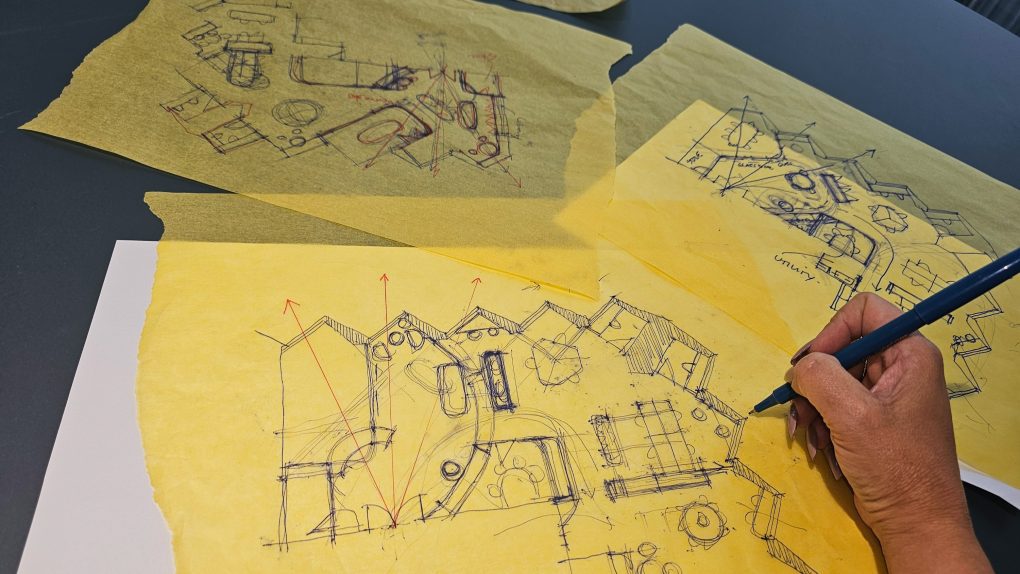
In the arena of interior design, there’s an understated elegance to starting with the humble pencil sketch before venturing into the digital realm with Computer Aided Drafting (CAD). This initial step, rooted in tradition, holds its ground as a crucial part of the creative process, despite the technological leaps in design tools.

As we enter the year 2024, there will be significant changes in office design. The highly anticipated “Great Return to Work” is altering our understanding and creation of workspaces. This article explores the shifting landscape and important trends that will shape office interiors in the upcoming year.

The sound quality of an office might not always be the first thing you consider, but it is crucial in shaping an optimal and efficient workspace. The acoustics of your workplace can greatly influence how you and your coworkers function, interact, and, most importantly, affect your general wellness.

Undoubtedly, there have been social issues accompanying the shift to remote work. This article discusses the potential for both success and drawbacks in remote working, particularly concerning the potential impact on work-life balance when the boundaries between work and personal life become unclear.

Contour Interiors presents a comprehensive guide to the often time-consuming and complex issue of commercial leases. In this How-To guide, Contour outlines the critical areas you must cover in order to save time and money, and how your new office fitout can be included in a new prospective lease.

In this article, we’ll explore the significance of workplace mental health, its impact on productivity, and provide practical strategies to foster a mentally healthy work environment. Join us as we leverage Contour Interiors’ experience and expertise to create workspaces that inspire creativity, collaboration, and support the mental well-being of your employees.

As a workplace design and fitout company, we understand the critical role that a well-designed workspace plays in enhancing employee productivity and satisfaction, fostering creativity, and improving a company’s bottom line.

There are so many moving parts in an office fitout and design project, and a multitude of factors that can negatively influence the outcome. Presenting the ultimate guide to getting your commercial interior design project right the First Time, brought to you by Contour Interiors.

In the modern world of work – especially post-Covid – hybrid meetings have become increasingly common. This can create challenges in terms of communication, engagement, and productivity. Here are some tips from Contour Interiors for running effective hybrid meetings between home and remote workers.

In recent years, ESG has become an increasingly important factor in influencing workplace decisions. ESG, which stands for Environmental, Social, and Governance, is a set of criteria used to measure the sustainability and ethical impact of an investment or business.

In recent years, there has been an increasing focus on sustainability, with individuals, companies, and governments alike recognising the need to take action to protect our planet. One area where sustainability is particularly important in the workplace. Here’s why it matters and how your company can achieve it.

The world of work is changing fast. For the better. Here are the Top 5 Global Workplace Design Trends for 2023 for offices and workplaces all over the world, from Contour Interiors.

In today’s post-Covid world, hybrid workplaces are becoming increasingly more common. Finding the right balance of collaboration and focus in a workplace can encourage employees to return to the office and allow them to appreciate the environment and become more productive.

If you’re looking for an office space that fulfils your true wants and needs as a company, you need to make sure you cover every angle. What you need is an office space that reflects your brand as a company, fulfils the needs of the company, and inspires and invigorates your workforce.

Here are some common sense precautions to take with your next office relocation project – especially when it comes to timing. Making a comprehensive office relocation plan is all about time invested, deadlines, and pre-preparation… Let us clue you in.

Even in the so-called “post-covid world,” covid safety remains a critical issue for any office interior design. It can be a challenge to ensure that you have a covid-safe office design because there are multiple factors that contribute to this.

The modern office has evolved to adapt to the different ways that individuals like to work. Many companies have been re-evaluating their position on open-plan offices to consider whether this type of office layout is the best overall for workplace productivity.

Workplace strategy has evolved from a metric mechanism to one which is an integral part of the development around business, talent and the broader economy — a conversation often driven by headlines focused on place, ways of working and flexibility. The world has reshaped and workplaces have flipped from the traditional view of an assigned desk within a heavy siloed workplace.

Finding or searching for the appropriate amount of office space is critical for growing businesses. How much workspace is required is dictated very much by the direction and strategy of an organisation, rather than a ‘cookie-cutter’ solution.
The goal of applying ergonomics in the workplace is to enhance product design and the layout of workstations in order to reduce the negative effects of exhaustion, fatigue, and minor injuries. Ergonomically designed workstations reduce the likelihood of experiencing pain in the muscles and joints as well as the likelihood of straining and slouching, both of which can be contributors to the development of more serious health issues. In this article we examine the many benefits of workplace economics and how they can be applied holistically as part of a workplace strategy.
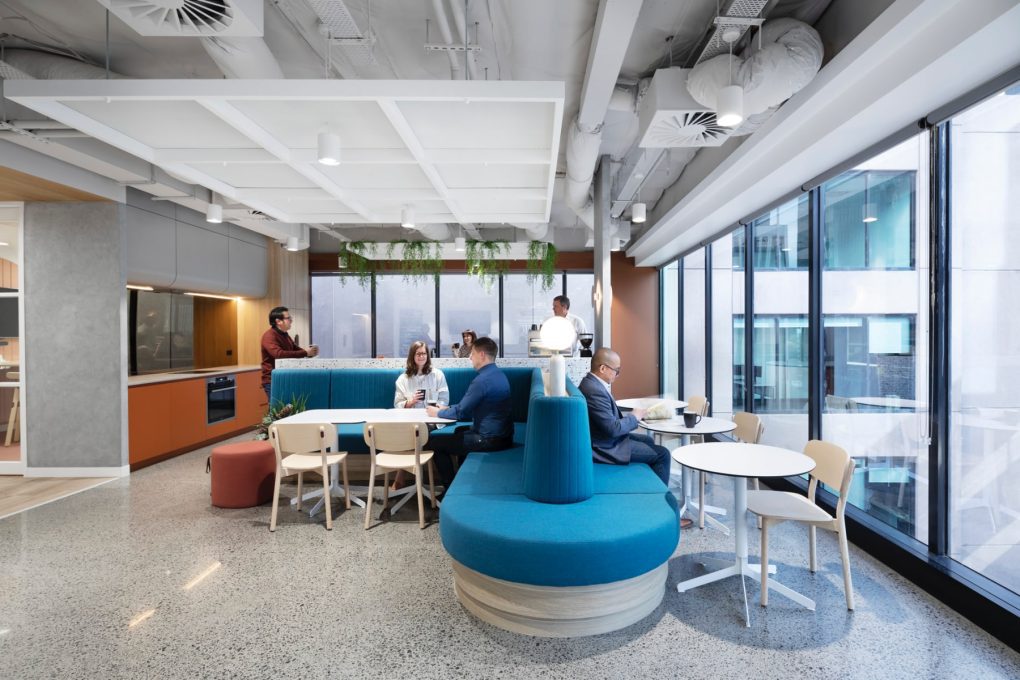
Collaborative workplaces have a myriad of benefits. When colleagues work together effectively, they get the opportunity to share their own knowledge, experience, and skills. This provides employees with the opportunity to discuss their own processes, and it makes them feel as though they are an integral part of the team. This article discusses collaborative workplaces, and the advantages of cross-functional teams and the resultant increased productivity.

The COVID-19 pandemic left most employees rethinking their jobs. While the cost of living keeps rising, their wages remain as is. In comparison to other companies and employers, they get lower pay, less opportunities, and a lack of work-life balance that continue to affect employees. More personal reasons like feeling disrespected at work, having childcare issues (for those who have children), being provided with bad or insufficient benefits, wanting to relocate to a different area, and even employers requiring COVID-19 vaccines contribute to the “quit rate”.
Enter your details below and we’ll be right back to you!
"*" indicates required fields